Text and images are one argument
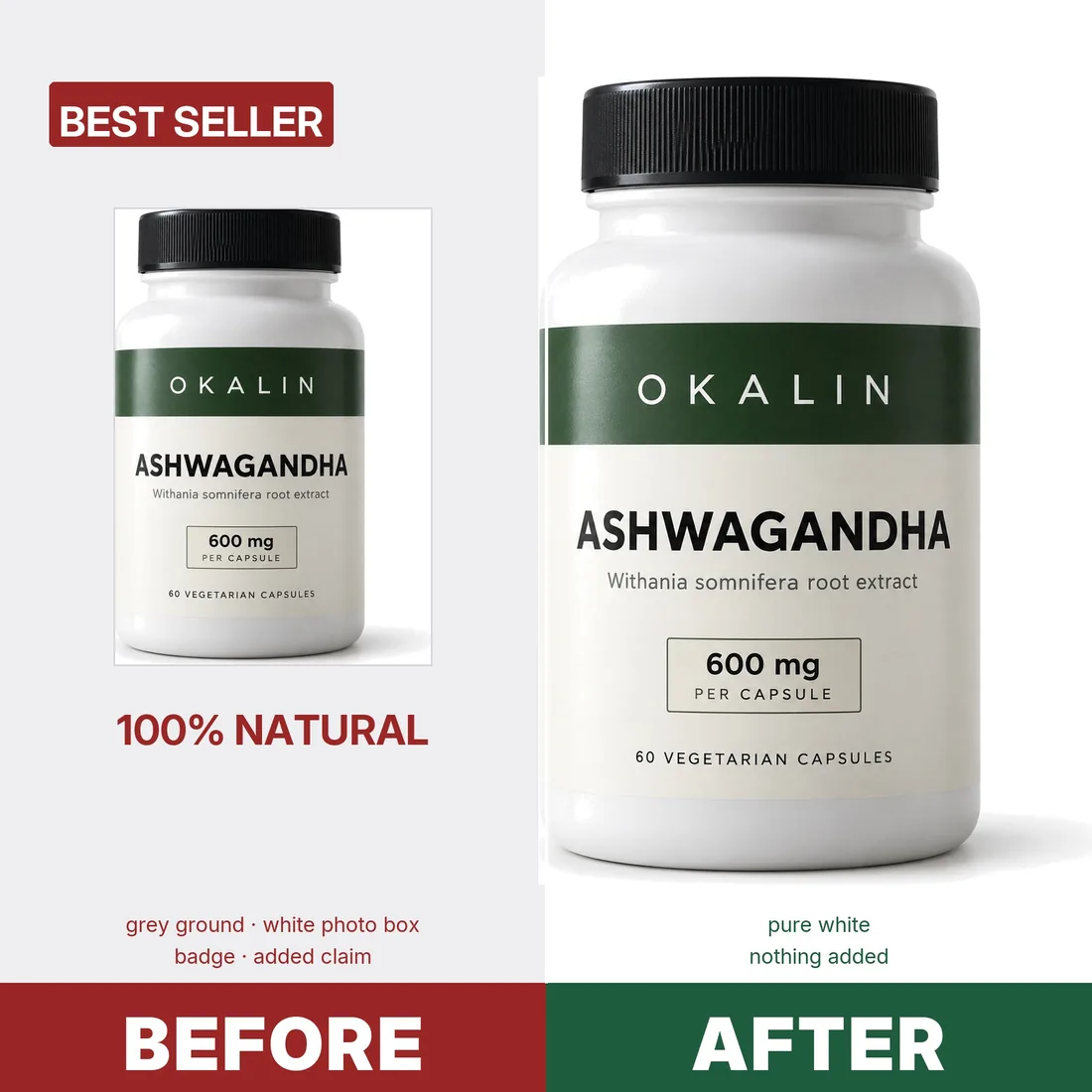
A shopper sees a thumbnail, a title and a price first. Everything else is read only if those three earn the click. That is why a rebuild treats the main image and the first few words of the title as a single decision. The image shows what the product is, the title says it in words, and the price sits beside it. Details are filled in after, in the bullets, the A+ Content and the lower images.
Amazon sets its own image and content rules, and category templates add more. We build to the rule that applies to your category, and our free listing image check shows the pixel-level result of a main image before upload.
Keywords are research, not stuffing
Keyword research starts with what buyers type, taken from your search-term data and Amazon's own suggestions. The point is not to include every term. It is to put the right ones in the right field: the main buyer-facing ones in the title and bullets, the rest in backend terms that stay inside the byte limit.
Repeating a word does not help and can make a listing read badly. Competitor brand names are not allowed. Claims that cannot be shown, such as medical outcomes, are removed. This is also what keeps a listing from being suppressed later, which is a cost we know first-hand from our own accounts.
How we know it worked
A rebuild is judged on conversion, because that is the number a better page can change inside two weeks. Rank takes longer. So we write down the four figures from your own Business Reports before we start, and read the same four after, as set out in the 15-day pilot and on how we measure.
Where a listing does not move, the note says so, and says what could have spoiled the reading: a price change, a stock-out, a review landing. If the problem is traffic, not the page, PPC comes next. The older page for a one-listing rebuild is still available at Amazon listing rebuild.
A caution about copying. It is tempting to rebuild a listing by mirroring the page that ranks above yours. That usually imports their claims, their gaps and their risks along with their words, and it can put your listing at odds with your own pack. We read competitors to learn what buyers expect, and then write from your product and your proof. That is slower than copying, and it is the only version that stays accurate.