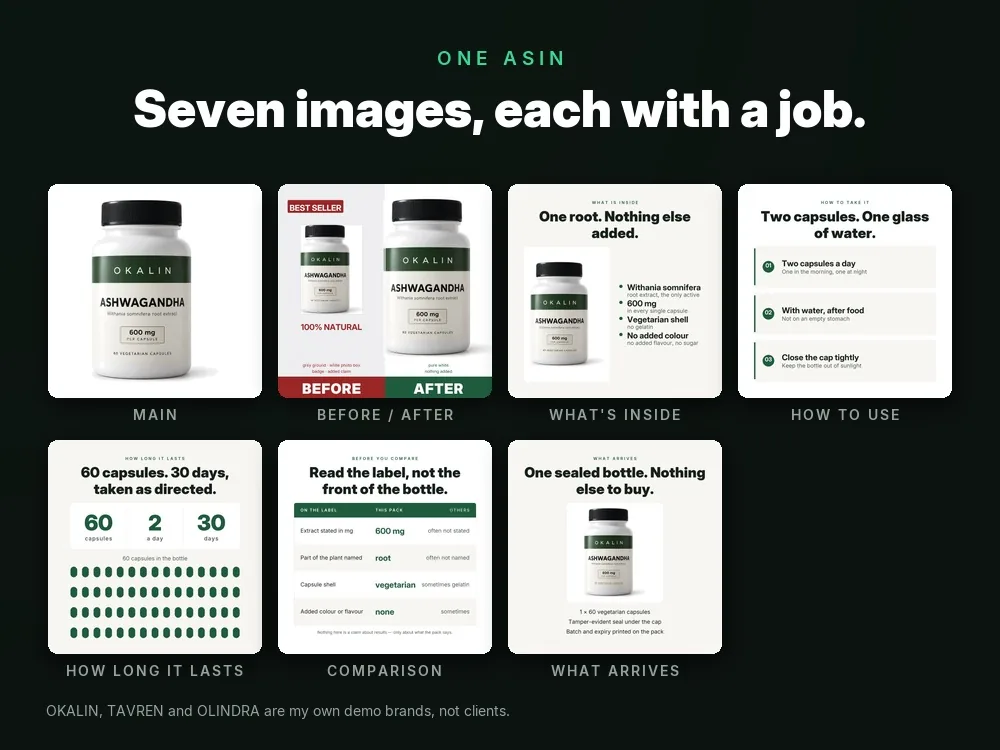
Drift is the problem
A catalogue starts clean and drifts. A pack changes and only one listing is updated. A claim is removed from Amazon but stays on Flipkart. A new variant is added on Meesho with a different size spelled differently. None of these is dramatic. Over a year they produce a brand that reads as three different brands, and a support inbox full of questions that the listing should have answered.
The remedy is boring and effective: one master sheet. Every product has one name, one attribute set, one set of image links and one identifier list. Listings are built from the sheet. A change starts in the sheet and is carried to each platform, and the change log records it.
Each platform has its own rules
The same product needs different shapes on different marketplaces. Titles have different length limits, attributes differ by category, image rules differ and A+ style content exists only where the platform provides it. Catalogue work is knowing those differences and building each listing to its own platform's template, from the same facts.
Our listing optimisation page covers the Amazon title, bullets and backend terms in detail. Catalogue management is the wider work: keeping those pieces in step with what you sell on Flipkart and Meesho, and with your own site. The listing images page covers the image rules that apply to the main image.
Hidden listings cost sales silently
A listing that a platform has hidden does not announce itself. Orders simply stop. A regular read of each marketplace's suppressed or inactive list, on a rhythm we agree in the quote, catches these. The reason is usually specific: a missing attribute, an image rule, a compliance question. We read it, make the fix that is inside scope and route the rest to you or to the platform's own support.
Catalogue work also feeds other work. Clean listings make PPC cheaper to run because the page matches the search. They make pricing clearer because a product has one cost and one set of fees. And they make marketplace activation faster, because the next platform starts from the sheet instead of from scratch.
A last word on ownership. The master sheet and the change log are yours, delivered as plain files. If you stop working with us, or hire someone in-house, the next person can open the sheet and see every product, every attribute and every change made, without needing to ask us anything. That portability is deliberate, and it is the opposite of a catalogue that only one person understands.